


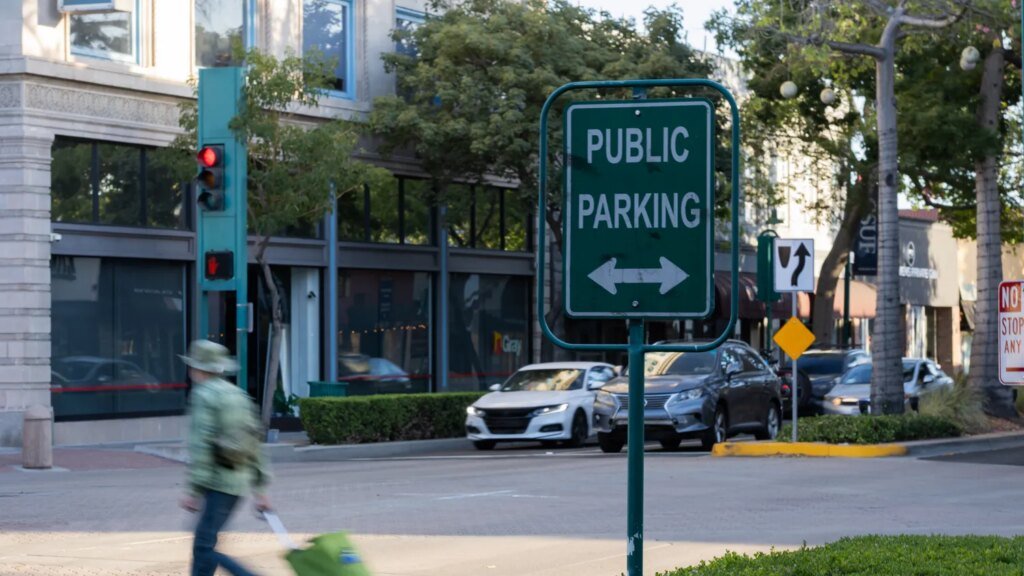

Orange County Drivers Are Increasingly Helping Patch City Budgets
As night falls over the historic streets of Old Towne Orange, a yellow sign blinks ominously in the dusk—”Paid Parking Enforced.” With this new edict, city officials hope to transform the parking woes of residents and tourists into a lifeline for a city grappling with a $3 million budget deficit. In a climate of ever-tightening municipal budgets, Orange County cities are increasingly looking towards their streets—not for traffic congestion solutions, but as a revenue-generating resource.
Budget Gaps Looming Ahead
As Orange County heads into 2026, multiple cities face significant financial shortfalls, some exceeding millions. According to the Orange County Finance Department, city leaders are tasked with seeking innovative ways to boost revenues. This pursuit has pushed parking regulations to the forefront, emerging as a surprisingly effective means of revenue collection.
“While parking issues often evoke frustration, cities are left with few choices when addressing budget deficits,” says Dr. William Hayes, an urban economics professor at Stanford University. “From my studies, cities have turned to similar measures historically, and it’s a trend that shows no signs of stopping.”
- Implementing paid parking in high-traffic areas like downtown zones.
- Introducing overnight parking permits in residential neighborhoods.
- Utilizing privatized enforcement to improve compliance and revenue collection.
Orange: A Case Study in Adversity
In Old Towne, just this year, city officials have implemented paid parking in response to a failed sales tax measure. Measure Z sought to raise sales tax from 7.75% to 8.25% but was rejected by over half the voters.
Mayor Dan Slater described the initiative as “a necessary evil.” The new parking system, charging between $1.25 and $2.00 per hour, is projected to generate around $900,000 in its first year and approximately $1.2 million thereafter. This income may help close the city’s $2.6 million budget gap, an impressive feat given ongoing fiscal pressures.
Fullerton’s Early Morning Permits
Meanwhile, Fullerton City Council members recently passed a measure to allow residents to purchase overnight parking permits for just $50. This decision came after a successful 18-month pilot program, underscoring a growing trend among local municipalities of turning to residents as a source of revenue.
“This approach not only simplifies the problem of street congestion but effectively keeps money flowing into city coffers,” notes Dr. Janet Leclerc, an urban policy expert at UC Berkeley. “Residents who utilize their streets effectively should contribute to the upkeep and budgeting of the community.” In Fullerton, the city grapples with a $9.3 million gap projected to swell in coming years, highlighting the urgency of these new measures.
Placentia’s Pilot Program
Placentia is also jumping on this bandwagon. The city recently launched a one-year paid parking pilot program in downtown, pricing nighttime parking at $5. Director of Public Works Chris Tanio indicated that accumulated fees collected during this pilot might cover necessary police enforcement costs.
“We are not just addressing the parking scarcity issue but also aiming to generate between $50,000 to $90,000 from this program alone, which should fund our enforcement needs,” Tanio explained during a recent city council meeting. This proactive stance comes as Placentia faces a tight $3 million budget deficit.
Community Impact: The Balancing Act
As cities aggressively pursue these new revenue streams, the societal ramifications are significant. Increased parking fees may displace certain residents or deter visitors. “It’s a balancing act,” warns urban sociologist Dr. Carla Jennings. “While cities need cash to function, they must also remain sensitive to the implications increased costs place on their communities.” As Orange County’s cities wind their way through increased parking regulations, careful attention to community needs will be vital for maintaining public buy-in.
City officials have found success in privatizing ticket enforcement as a way to boost revenue collection. In Fullerton, the city is utilizing SP+, a private enforcement firm, which it predicts will increase ticketing and, ultimately, revenue.
A New Kind of Revenue Model?
The combination of innovative parking solutions and privatization has drawn caution from voter advocacy groups concerned about the equity implications of these changes. The prevailing sentiment is that while paid parking could indeed help mend budget holes, cities need to tread carefully to avoid exacerbating the financial burdens placed on their residents.
“Introducing these fees without understanding the socio-economic realities of the communities involved risks creating an environment that prioritizes revenue over residents,” warns activist Eliza Grant, echoing the sentiments of many who find themselves impacted by these changes. “Cities ought to ensure these programs don’t inadvertently punish those they are meant to serve.”
As Orange County continues to grapple with pressing financial challenges, cities like Orange, Fullerton, and Placentia are stepping onto the frontline of a fiscal battle, attempting to shore up their budgets by charging those who park. In doing so, they are reframing how urban spaces can serve as both community resources and revenue vessels in a rapidly changing economic landscape.