


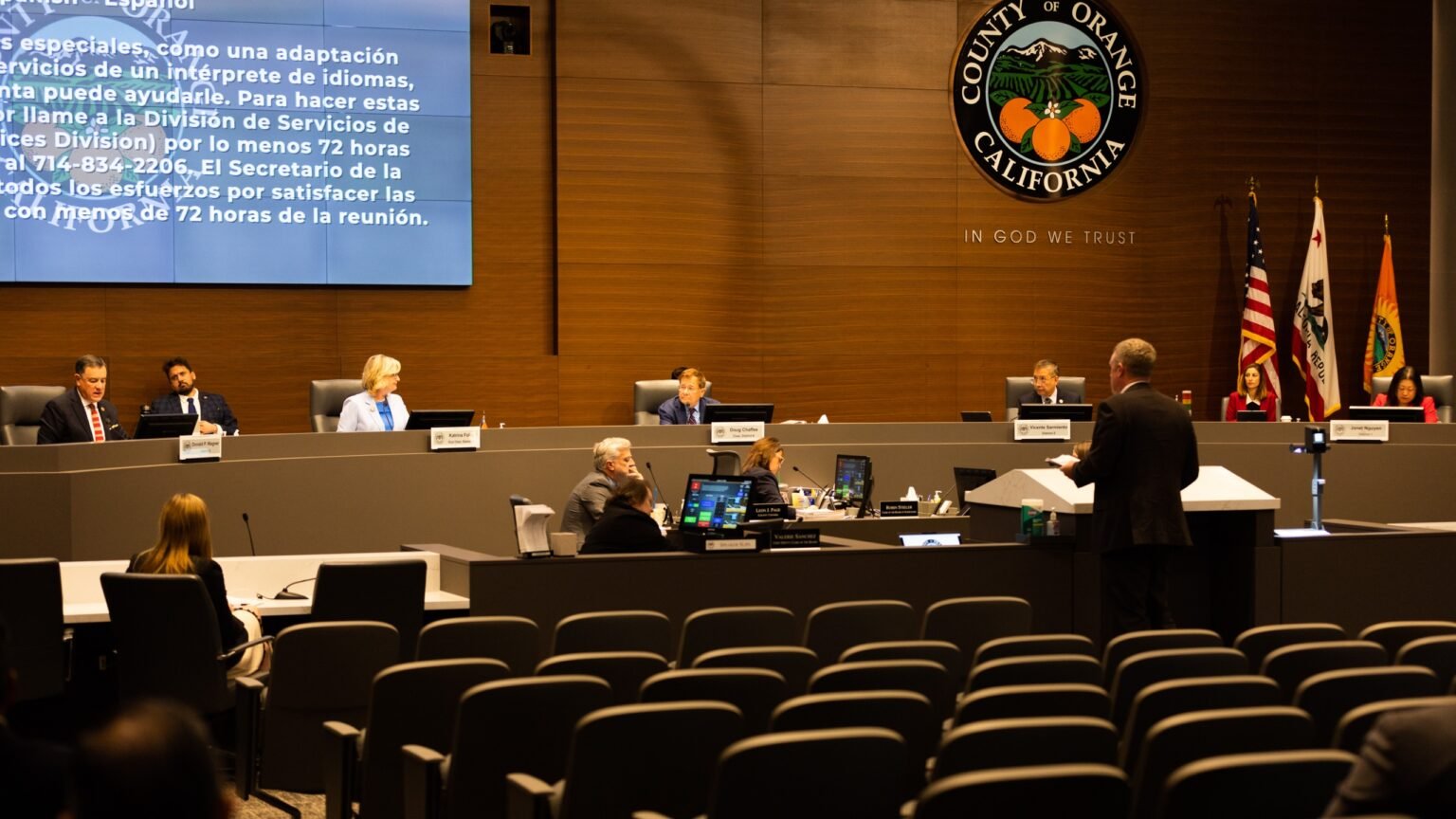

A Heated Debate Over Power Dynamics in Orange County Supervisors
In the wake of a contentious supervisors’ meeting, a political storm has unfolded in Orange County as two Republican supervisors accused Democrat Supervisor Katrina Foley of overstepping her authority. The debate was ignited by Foley’s recent press release announcing a countywide pause on herbicide spraying, a decision met with both criticism and support from the community. Her move, initially framed as a response to public outcry, now raises critical questions about governance, authority, and political maneuvering in a volatile election season.
The Press Release That Sparked Controversy
“Harmful toxins have no place in our waterways,” Foley stated in her release. This statement was part of her promise to address public concerns after facing backlash during town halls. While Foley had previously approved a pilot program pausing spraying in her district in South Orange County, her announcement of a comprehensive countywide suspension lacked the requisite support from fellow supervisors.
At a subsequent public meeting, Supervisors Don Wagner and Janet Nguyen expressed disbelief at Foley’s unilateral action. “This issue is not about politics; it’s about one county supervisor overstepping her authority,” Nguyen insisted. The tension between the three supervisors illuminated a deeper power struggle. What authority do supervisors possess in directing county staff? Do they operate independently or collaboratively?
Power Dynamics and Governance Questions
Orange County operates under an unusual governance structure in which elected supervisors hold substantial power over a county CEO. While city governments in the area rely on city managers, county supervisors navigate a complex political landscape that often blurs the lines of authority. This tension has only heightened in recent years, particularly following a corruption scandal involving former Supervisor Andrew Do, which exposed how county staff were directed without public votes.
In light of these dynamics, political analysts are questioning how much control supervisors should wield. As Dr. Emily Carter, a political scientist at the University of Southern California, explains, “The balance between accountability and authority is delicate in local government. Excessive unilateral action from any supervisor risks undermining the collaborative nature of governance.” Foley’s actions invoke this concern, suggesting that the power dynamics within the board may require recalibration.
- Unilateral Authority: Questions surrounding the limits of individual supervisors’ power.
- Public Response: The effect of community input on policy decisions.
- Accountability: The responsibility of supervisors towards their constituents.
The Political Battlefield
Foley’s opponents have framed her announcement as an attempt to politicize an important public issue, especially as she campaigns for reelection. In a meeting punctuated by sharp exchanges, Wagner accused Foley of “the classic Andrew Do play,” implying that she was using her authority to influence staff for personal gain. Foley, however, countered these accusations by asserting that her actions were rooted in community needs rather than electoral self-interest.
While sovereignty in decision-making and the ability to apply pressure are inherent to a supervisor’s role, the potential for that power to be abused cannot be ignored. “Any one of us has no legal authority to do things unilaterally,” Wagner emphasized during the meeting, underscoring a sentiment echoed by many in the political arena. The perceived connection between Foley’s authority and past corruption scandals poses a significant concern, especially in an increasingly partisan landscape.
The Call for Clarity in Governance
The debate over governance comes at a crucial time for Orange County’s political framework. Nguyen has taken the initiative to advocate for a public discussion on the roles and responsibilities of supervisors moving forward. “It’s vital that we establish clear boundaries for authority among our members,” she remarked following the meeting. This proposal aims not just at clarifying current powers, but also at fostering a collaborative environment that values input from the entire board.
This is a timely issue, as misconceptions surrounding individual power can lead to a breakdown of trust and cooperation among supervisors. “Clarity in roles can restore faith in our local government,” Dr. Lisa Hargrove, an expert in public administration at UCLA, affirmed. “When constituents see their elected officials working together effectively, it enhances civic engagement and confidence in local governance.”
The friction between Foley, Wagner, and Nguyen illustrates the complexities inherent in local governance, particularly when it intersects with the electoral calendar. As Orange County navigates these turbulent waters, the decisions made by its supervisors will not only affect policies but also set a precedent for how power dynamics unfold in the future.
While the immediate concern revolves around herbicide spraying, the broader implications of this debate cannot be overstated. The Orange County Board of Supervisors stands at a crossroads—will they reinforce a culture of collaboration, or will further divisions signal a more contentious political landscape as the primary elections approach? Only time will reveal the outcomes, but one thing is clear: the residents of Orange County deserve transparency and accountability from their elected officials.