



LAPD’s Request for Increased Staffing and Resources Ahead of the 2028 Olympics: A Mixed Reception from LA City Council
As Los Angeles gears up for the upcoming 2028 Olympic and Paralympic Games, the Los Angeles Police Department (LAPD) is pushing for essential staffing and resource increases to ensure public safety during this high-profile event. LAPD Chief Jim McDonnell has highlighted a pressing need for more police officers and upgraded equipment, emphasizing that public safety could be compromised if these needs are not met. However, City Council members have shown skepticism about allocating funding, citing uncertainties around operational plans and associated costs.
The Staffing Dilemma: Need vs. Reality
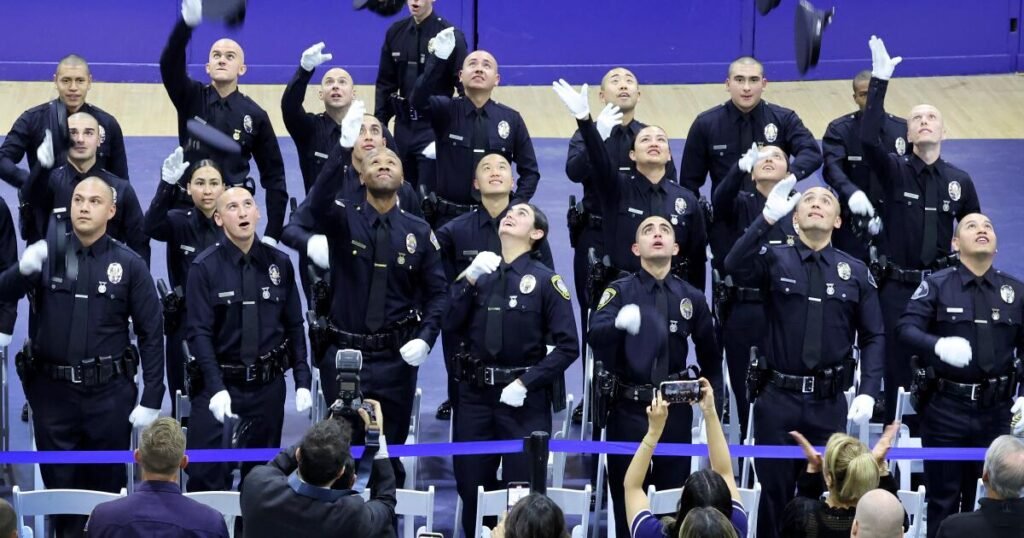
At a recent budget hearing, Chief McDonnell reiterated alarming projections regarding officer attrition, predicting that hundreds of officers are expected to leave the department in the next two years. To mitigate this, the LAPD is requesting 520 new recruits for the next fiscal year, aiming to counteract an anticipated attrition of approximately 510 officers. Currently, the LAPD comprises about 8,600 officers, and the Chief’s proposal would merely add 10 officers to the force. With LAPD tasked to provide around 2,400 officers—roughly one-third of the overall security needs during the Games—Council members are left questioning whether the request adequately addresses the pressing need for a robust police presence.
Concerns over Funding and Resource Allocation
The LAPD is also asking the city to allocate nearly $100 million for purchasing upwards of 500 new vehicles and critical equipment, including upgraded radio systems and body cameras. Commanding Officer Mario Mota informed council members that these vehicles would be instrumental for policing various Olympic venues and continuing regular operations throughout the event. However, former assumptions that federal authorities would dominate security operations have provoked concern, leading to skepticism among council members about whether Los Angeles taxpayers should shoulder these expenses.
The Federal Funding Conundrum
Despite the federal government earmarking $1 billion for Olympic security expenditures, including support for state and local law enforcement, the distribution timeline and specifics remain unclear. Adding to the unease is the unpredictability surrounding federal funding commitments, particularly in light of changing political landscapes. Without a formal agreement with LA28, the nonprofit responsible for organizing the Games, council members worry about incurring substantial expenses that could significantly impact the city’s budget, already strained from a nearly $1 billion deficit.
Challenges in Decision-Making
Amid these uncertainties, City Council members expressed confusion over the LAPD’s operational role within Olympic venues. Questions arose about the fiscal responsibility of spending on new vehicles, with council members querying if options like leasing or repurposing existing assets had been considered. The LAPD has yet to explore these alternatives, frustrating council members and igniting discussions about the department’s overall strategic vision.
Historical Context and Future Implications
The LAPD’s plans are not without historical context; since the 1984 Summer Olympics, the department has faced scrutiny over increased militarization and the disproportionate impact on marginalized communities. Concerns linger around the LAPD’s evolving role in urban policing, especially in light of past events where increased equipment led to aggressive policing tactics. As security preparations advance, calls for accountability and transparency grow louder, with some council members advocating for a reassessment of internal resource allocation and personnel management.
A Balancing Act Ahead
As the city continues its preparations for the Olympics, the balancing act between adequate public safety measures and responsible fiscal policy remains tenuous. Mayor Karen Bass, focused on stabilizing an already strained department, has encouraged finding a way to maintain staffing levels rather than expand them. The city faces the dual challenge of meeting the security demands of a global event while navigating through budget constraints and public accountability. As Los Angeles gets ready for this monumental occasion, the ultimate success will depend on collective efforts to ensure a secure environment while remaining cognizant of the larger implications for the city and its residents.
In conclusion, while the LAPD’s requests underscore the importance of security and public safety for the upcoming Olympic and Paralympic Games, the concerns raised by City Council members reflect a deeper examination of budget management, resource allocation, and community impact. The city’s response will undoubtedly shape its legacy as it prepares for this international showcase.
This article is based on reporting from www.latimes.com.
The original version of the story can be found on their website.
Original Source:
www.latimes.com
Image Credit: www.latimes.com ·
View image