



Modern Fish Mounts: Preserving Memories While Protecting Marine Resources in Southern California
Fishing has always been a defining experience for anglers, especially when it comes to landing a trophy catch. Whether it’s a hard-fought bluefin tuna offshore or a vibrant dorado under kelp paddies, the thrill often compels anglers to immortalize their achievements. Traditionally, this meant bringing the fish home for dinner and decor. However, changing attitudes and advances in technology have led to a significant shift in this tradition, especially in Southern California, where conservation-minded practices are increasingly important.
Modern fish mounting has transformed from the time-honored art of taxidermy into a more sustainable and artistically refined process. Historically, taxidermy involved preserving the actual fish by removing its skin and positioning it over a form. This method, while effective, had limitations. Fish skin is delicate and can deteriorate over time due to environmental factors, and the practice often contradicted the growing emphasis on catch-and-release policies. For anglers committed to conserving marine life, modern fish mounts provide a solution that honors their memorable catches without compromising the fish population.
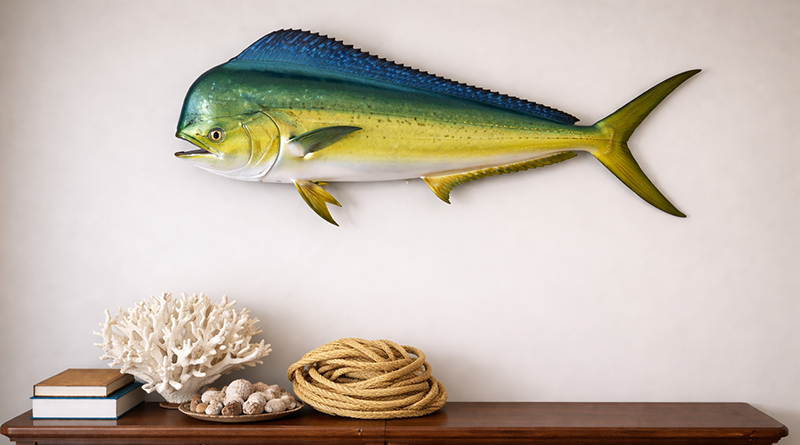
Unlike traditional taxidermy, modern fish mounting relies on creating replicas of the fish using fiberglass or composite materials. This approach allows for a realistic and durable representation of the catch while preserving the experience itself. By taking precise measurements and high-quality photographs at the moment of the catch, skilled artisans can create remarkably lifelike replicas that reflect the fish’s original colors, patterns, and proportions. For Southern California anglers, whose offshore waters boast stunning species with striking colors, this method captures their beauty more effectively than traditional mounts that may lose vibrancy over time.
The shift toward replica mounts aligns perfectly with the ethos of conservation within the Southern California fishing community. Many anglers are now choosing to release large or breeding fish, particularly species like bluefin tuna and marlin, instead of keeping them. By opting for replica mounts, they can commemorate their fishing experiences without harming marine ecosystems. This practice not only preserves the joy of angling but also fosters a culture of sustainability, where anglers are empowered to make environmentally responsible choices while still reliving their best days on the water.
In addition to ecological benefits, this evolution in fish mounting has created opportunities across the marine industry. Professional mount makers, combining artistic skill with technical knowledge of fish anatomy, are in high demand. Charter operators and sportfishing crews contribute by encouraging proper measurements and photographs for future mounts. They often collaborate with mount makers to streamline the process for their customers. Marine retailers have also entered the space, offering tools that facilitate documentation and display, enhancing the overall fishing experience.
The process of creating a modern fish mount begins right on the boat. Anglers are advised to measure the fish carefully, noting various details such as length, girth, and unique markings. Capturing high-quality images from multiple angles ensures that all essential features are documented for the mount. Once this information is gathered, it is shared with the mount maker, who uses it to create a replica that embodies the essence of the catch. This collaborative approach allows for personalized choices regarding pose, finish, and display, resulting in a unique piece that recounts the story behind the catch.
As fish mounting evolves, it highlights a broader cultural shift in how the fishing community engages with marine resources. Anglers are increasingly defined by their practices rather than just their catches. Modern fish mounts honor the memory of a cherished experience while prioritizing sustainability, allowing the tradition of fishing to continue without sacrificing the future of marine ecosystems. This practice has made it possible for anglers to celebrate their adventures long after returning to the dock, effectively reliving their best days on the water.
For more information on innovative fishing practices and conservation efforts, visit the California Department of Fish and Wildlife and check out Fish.org for tips on sustainable fishing and marine resources.
In summary, modern fish mounts serve as a bridge between nostalgia and sustainability for Southern California anglers. By embracing this innovative approach to preserving memories, the fishing community can maintain its commitment to conservation while continuing to celebrate the thrill of the catch.
This article is based on reporting from thelog.com.
The original version of the story can be found on their website.
Original Source:
thelog.com
Image Credit: thelog.com ·
View image